Cashiers Didn’t Move. The County Line Did.

Updated: 47 minutes ago
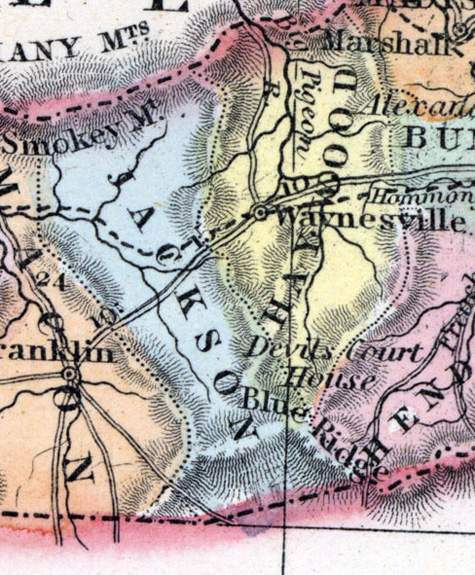
Last week, I went looking for Jackson County on an old map. This week, I found Cashiers. In Macon County.
Golly.
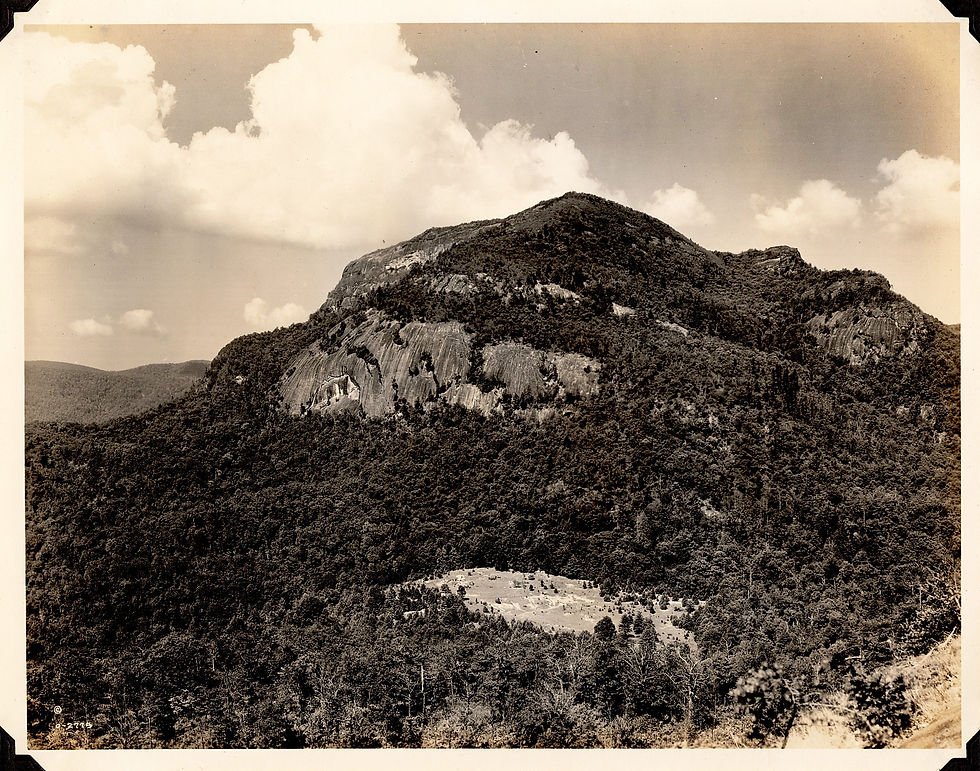
Last week, I went looking for Jackson County on an 1857 map and couldn’t find it.
This week, I found Cashiers. In Macon County.
I know.
I had questions, too.
And somewhere between an old census, a county line and the realization that apparently, I am going to spend Jackson County’s 175th birthday wandering around in the nineteenth century, I found a little piece of our story I had never heard before.
Cashiers is older than Jackson County.
Not the mountains, of course. They had a considerable head start on all of us. And long before we arrived, this was Cherokee homeland. But the community we know today, which began as Cashiers Valley, was already taking shape before Jackson County existed.
The Cashiers Historical Society neatly points out that white settlers began arriving in the valley in the 1820s. The Zachary family came in the 1830s. By 1839, Cashiers Valley had a post office. Gold was being mined here in the 1840s, and families were building homes, opening stores, raising children, burying their dead and doing all the ordinary things people do when somewhere stops being merely a spot on a map and starts becoming home.
And all of that was happening in Macon County.
There it was in the 1850 census: Cashiers Valley, Macon County, North Carolina.
I stared at that for a minute.
Because county lines mean something here even though we cross back and forth all the time, sometimes several times in a day, without much thought to the invisible line beneath our tires.
But in 1850, there was no Jackson County.
And here is where history likes to spoil a perfectly tidy story.
Cashiers is older than Highlands.
Well, now. I stared at that for a minute or two.
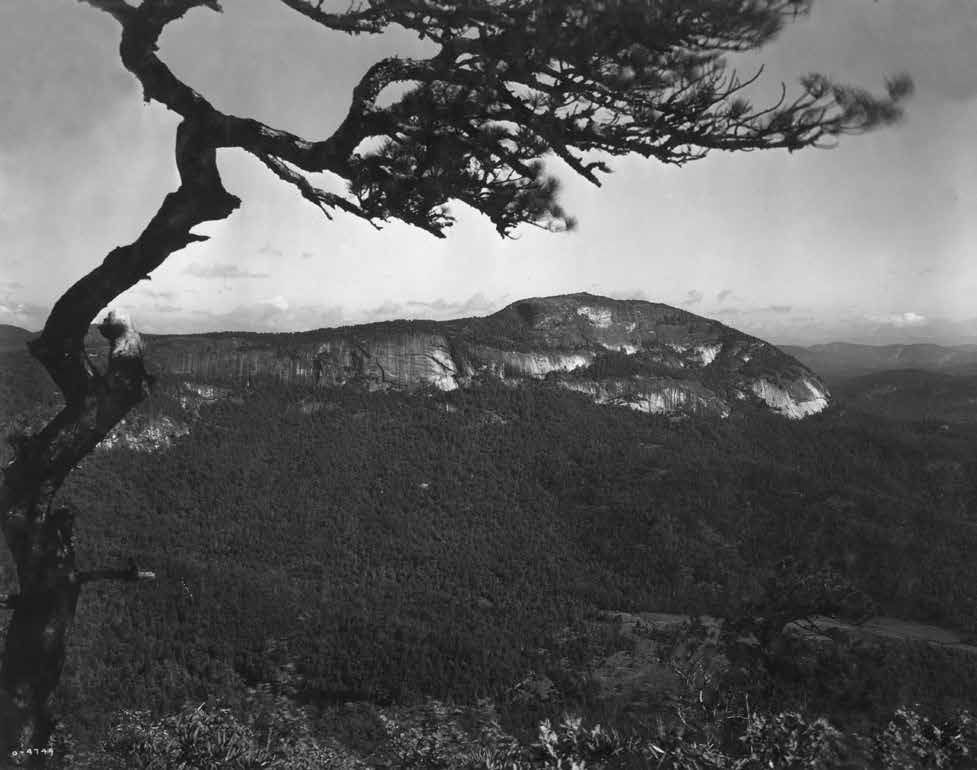
The HIGHLANDS HISTORICAL SOCIETY notes Highlands was founded in 1875, when Samuel Kelsey and Clinton Hutchinson arrived with a rather ambitious idea involving two lines drawn across a map and a future city at their intersection. Meanwhile, Cashiers Valley had been taking shape for decades. So no, I haven’t uncovered a nineteenth-century tale of two sister towns sitting side by side in Macon County, borrowing sugar and comparing mountain views. But I may have found something I like better.
We were connected before we were divided.
In 1851, the North Carolina General Assembly created Jackson County from portions of Haywood and Macon counties. And Cashiers Valley became part of the new county.
The people didn’t pack.
The Zacharys, the Gibsons and the Nortons didn’t load their wagons.
Nobody moved the mountains.
Whiteside stayed exactly where somebody considerably more powerful than the General Assembly had put it.
Cashiers Valley didn’t move.
The county line did.
And I keep coming back to that because there is something wonderfully humbling about discovering that the boundaries we treat as permanent are often among the newest things on the landscape.
The rivers were already running.
The gaps were already there.
Families had already found one another.
People were traveling these mountains, trading, farming, visiting and marrying and worshipping and arguing and helping one another through winters long before anybody in Raleigh decided which courthouse would hold their deeds.
Then somebody drew a line.
And that line mattered. It still does. It put Cashiers in Jackson County and left the land that would become Highlands in Macon County, and two neighboring communities grew into their own places and, if we are being truthful, developed the sort of good-natured opinions about one another that neighboring mountain towns have probably been entitled to hold since the invention of neighboring mountain towns.
Highlands incorporated. Cashiers never did.
Cashiers grew around a Crossroads. Highlands grew around Main Street.
They developed different rhythms and traditions, different ways of telling their stories and different ideas about where one place ends and the other begins, and somewhere along the way — considerably more recently than anything I've been digging through for this story — we acquired a shared modern term for all of it: the Plateau.
I know. I know.
I understand the convenience, especially for visitors who can have breakfast in Cashiers, hike near Highlands, come back across the county line for dinner and never once wonder which county they're in. And really, why would they?
But history has a way of making our tidy marketing language a little untidy.
And, wouldn't you know it, the geography does, too.
To be fair, Cashiers can be described geographically as a mountain plateau — not a broad, flat tabletop, but a high-elevation landscape folded with valleys, ridges, streams and mountains. Which makes sense once somebody explains it, because you certainly don't look around Cashiers or Highlands and think, “Well, this place is flat.”
So, yes, the geography may be a mountain plateau. Fair enough. But geography is one thing; identity is another, and this is where an old census starts being considerably more interesting to me than a modern label.
Cashiers Valley was already a place with a name.
And Cashiers Valley didn't begin as the other end of anybody's Plateau.
Today, we call it Cashiers, and the making of Highlands has its own history and its own story, too. Our businesses share customers, our organizations share supporters, the Cashiers Area Chamber of Commerce and Highlands Chamber of Commerce/Visit Highlands, NC currently share 68 members, and we send visitors back and forth across these mountains every day because mountains have never been particularly interested in marketing territories. And the more I learn about both, the more interested I become in the thing I didn't know when I started all this digging.
Of course I knew our communities were connected; I just didn't know how far back the connection went, and there is something about finding it tucked into an old census from 1850 — sitting there quietly for 176 years, waiting for me to stumble across it — that makes the discovery exciting.
Being good neighbors doesn't require us to flatten our differences into a shared modern shorthand. We can call them what they are — Cashiers and Highlands — and let each be entirely itself, because knowing more of their history doesn't make the differences between them less interesting; it makes them more so, especially when you discover that these two neighbors have been connected longer than the line that divides them.
History has a funny way of revealing what you didn't know you were asking.
You go looking for the answer to one question and come home carrying another, and somewhere between the census records and county maps, I stopped wondering which side of the line our story belonged to and started wondering why we assume the line is where the story begins.
A county can be created by an act of the legislature.
A community takes longer.
It gathers itself slowly — around a store counter and a church pew, along a creek and across a mountain gap, through families who stay and families who leave and people who arrive thinking they are only visiting and somehow never quite get around to going home.
Which brings me back to something I wrote when this series began.
A county doesn’t turn 175 all at once.
Apparently, neither does a community.
And sometimes, if you go wandering around in an old census long enough, you discover that the connection was there before the divide.
Comments